Alberta does not use it, so there is no power of sale in Calgary. A lender here cannot sell your home without going through the Court of King's Bench, which is why Ontario and American advice does not apply to a Calgary homeowner. In practice that usually means more time, a court file you can respond to, and title that stays yours until a sale is confirmed.

The short answer
A lender cannot sell your home on its own here. There is no power of sale in Calgary: a foreclosure goes through the Court of King's Bench of Alberta and stays court-supervised from start to finish.
Why so much advice online says otherwise
Two reasons, and both are easy to fall into when you are searching at two in the morning.
Ontario. Power of sale is common there, and a great deal of Canadian mortgage-default content is written from an Ontario perspective without saying so. It describes a lender selling relatively quickly and largely outside court. That is a real process — it is just not the process in Alberta.
The United States. Many states use non-judicial foreclosure, which can move in weeks. American articles, videos and forum answers dominate search results, and none of it describes what happens here.
What the difference means for you in practice
- There is a court file, and there are deadlines attached to documents. You are served, you can respond, and the matter is decided by a court rather than by the lender alone.
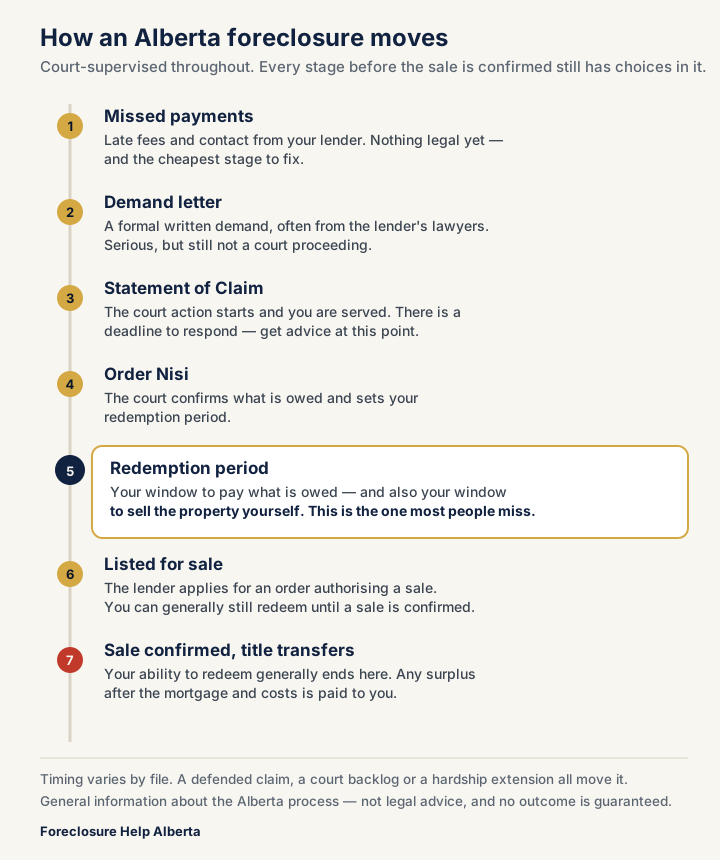
- There is generally more time. The Calgary sequence runs through a demand letter, a Statement of Claim, an Order Nisi and then a redemption period — commonly around six months for an ordinary, non-farm home. The full timeline is here.
- Title does not change early. Ownership transfers only when a court order confirms a sale and vests title. Until then the home is yours to sell.
- The surplus is yours. Once the mortgage, the arrears and the costs are paid, what is left belongs to you — which is why the sale price is your problem and not only the lender's.
Where the American advice is actively harmful
The dangerous version is the advice that says there is nothing to be done and no time to do it in. People act on that by disengaging — not opening mail, not responding, not selling — and disengaging is the one approach that reliably costs the most, because the process advances whether or not you take part in it.
The accurate version is less dramatic. You are usually months away from anything final, you have real options for most of that period, and the options narrow gradually rather than vanishing overnight.
What to do with that
Work out which stage you are actually at, then work out your numbers. Those two answers between them determine which options are genuinely open, and both can be done without giving anybody your details.
Who you are actually dealing with: Rob Vanovermeire
Rob Vanovermeire is Broker of Record at Coldwell Banker Mountain Central, a licensed Alberta real-estate brokerage. A foreclosure is not an ordinary sale and it does not run on a seller's timetable: the court sets the dates, the lender's costs keep accruing against your equity while they pass, and most of the decisions worth making have to be made before a sale is confirmed rather than after. Knowing which of those dates is the one that actually binds you is the difference between having options and being told what is happening.
For a Calgary homeowner that is concrete. Your file is heard at Calgary Courts Centre, 601 5 St SW — so the paperwork timeline you are working to is that one, not a general Alberta one and not an American one. It is the kind of detail that decides whether there is still time to market a home properly or only time to react. Where title is concerned: Land Titles South.
What he is brought in for is the part with money in it: what the home is realistically worth today, what a court-run sale would likely leave once costs come off it, and whether a properly marketed sale in the time available would do better than that. You get those numbers before you decide anything. Nothing is listed, no lender is contacted, and nobody is committed to selling — plenty of people use the figures to argue for keeping the house instead. Ask for a free, confidential assessment.
Free help in Calgary
These are independent organisations. We are not connected to them and we are not paid to list them.
- Calgary Legal Guidance — 403-234-9266. free legal help for low-income Albertans — office hours Monday to Friday, 9am to 4pm; phone to ask about clinic times
- Court Assistance Program (KB Amicus). free 30-minute volunteer-lawyer consults for self-represented civil litigants, walk-in at the Calgary Courts Centre
- Basic Needs Fund — call 211. emergency funds for rent arrears and eviction prevention
- Legal Aid Alberta — 1-866-845-3425
- Money Mentors — 1-888-294-0076. Alberta non-profit credit counselling, and the Orderly Payment of Debts programme — an Alberta-only court-ordered consolidation option
- 211 Alberta — 211. connects you to local financial and housing supports
If a consumer proposal or bankruptcy might be part of your situation, speak to a Licensed Insolvency Trustee. They are the only people licensed to advise on it.
Questions people ask
The complete Calgary foreclosure guide: every stage, every option, in one place →